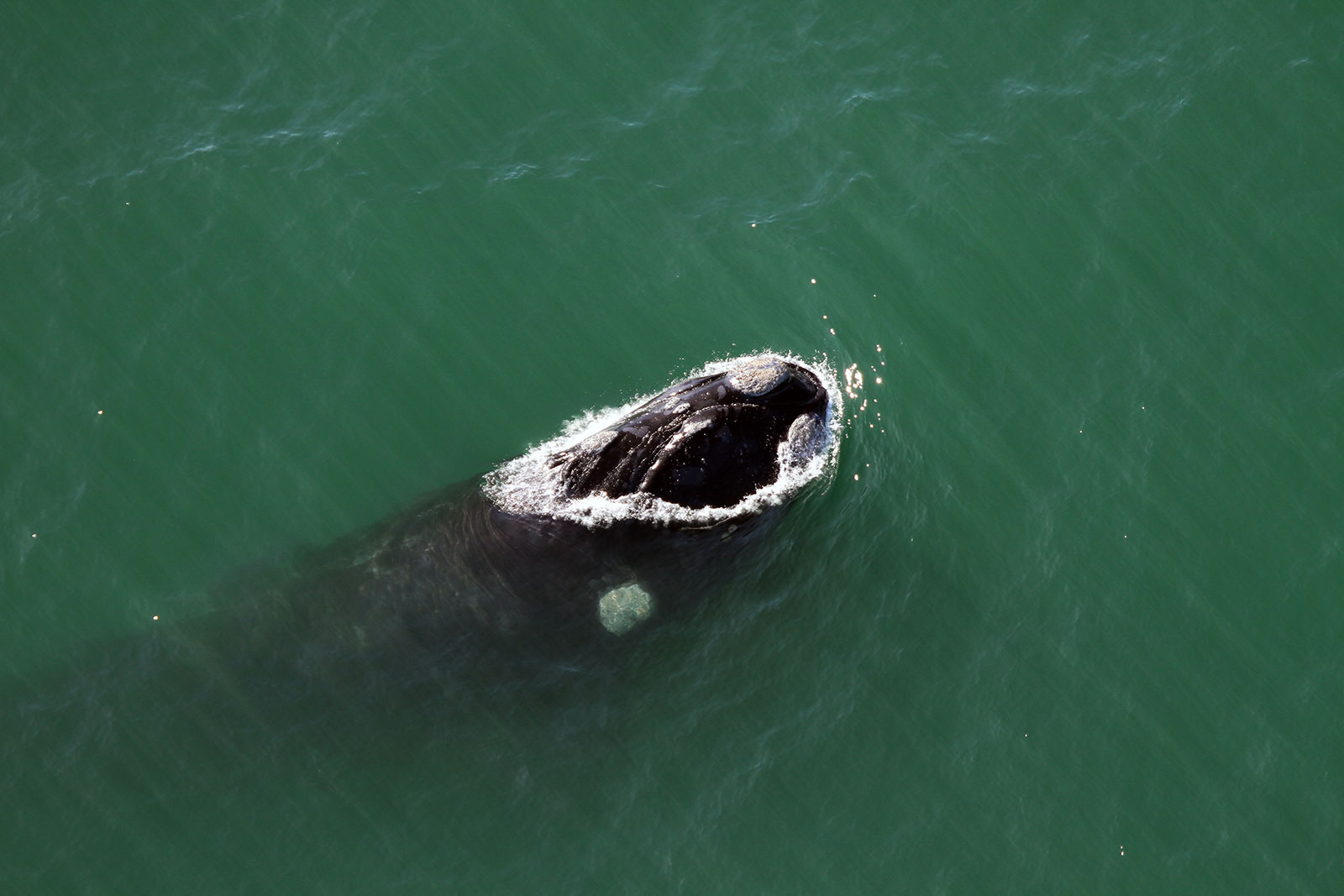
Maggi the Whale

Meet Maggi the Whale

We are proud to introduce Maggi, The Windsor Hotel’s adopted Southern Right Whale and a cherished member of our extended family. Through our partnership with the Mammal Research Institute Whale Unit, we are honoured to support the ongoing conservation and research of these magnificent marine giants that grace our coastline each year.

By contributing to this important initiative, we help protect and better understand the Southern Right Whales that return annually to our shores, ensuring future generations can continue to experience the wonder of whale watching in Hermanus.

Named after the wife of the late Professor Peter Best, Maggi was the first female southern right whale to ever be identified in South African waters.

The code researchers assigned to her is 79/01A, indicating the year of identification (1979) and that she was the first whale to be seen during that particular aerial survey (01). The code also indicates that Maggi is an adult (A).

Maggi was observed for the first time on 12 October 1979 in Plettenberg Bay. During that time, she was accompanied by her calf. As Maggi already had a calf in 1979, she is now at least close to 50 years old. Maggi has a small grey marking on her back, which must have been white when she was born. This means that Maggi is a partial-grey morph, and that she carries a gene that codes for partialgrey morphism. She has passed this gene onto at least 4 of her calves, who also have a grey marking or of brindle colouration and are therefore recognisable to researchers from birth. In total, Maggi has had 10 calves since 1979, all born along the South African coast.

Overall, Maggi has had normal 3-year calving intervals. However, she had a 5-year calving interval between 1979 and 1984. This suggests that Maggi had some kind of calving failure before her calf of 1984. Additionally, there seem to be a few 6-year calving intervals (between 1984 and 1999, between 1999 and 2005, and between 2005 and 2011). This suggests Maggi was missed on the surveys of 1987,2002 and 2008, possibly due to the fact that she had already left the South African coast by October, when the survey is conducted, or that she was underwater and missed when the helicopter flew over.

windsor-hotel-maggi-the-whale-calves

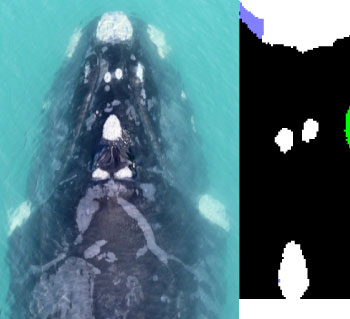
Maggi's Identification Patterns

Callosity Pattern

windsor-hotel-maggi-the-whale-callosity-pattern

Dorsal Colouration Pattern

windsor-hotel-maggi-the-whale-dorsal-colouration-pattern

Maggi Sightings

Dates and locations Maggi has been seen since the commencement of the Annual photo-identification surveys:

2014

Pearly Beach with an unidentifiable calf.

2011

Stilbaai with a partial-grey calf (11/02C).

2005

De Hoop Nature Reserve with an unidentifiable calf.

1999

De Hoop Nature Reserve with a brindle calf (99/96C).

1996

St Sebastian Bay with an unidentifiable calf.

1993

St Sebastian Bay with an unidentifiable calf.

1990

Arniston with an unidentifiable calf.

1984

De Hoop Nature Reserve with a brindle calf (84/69C).

1979

Plettenberg Bay with a brindle calf (79/01C).

Maggi's Identified Calves

windsor-hotel-maggi-the-whale-calf-79-01c

Calf 79/01c

Born with a brindle colouration in 1979 in Plettenberg Bay, but has not been seen since.

windsor-hotel-maggi-the-whale-calf-99-96c

Calf 99/96c

Born with a brindle colouration in 1999 in De Hoop Nature and subsequently identified in 2004 as a juvenile (04/68J) after which he or she was spotted again in 2005. If this whale is female, we would expect to see her with a calf soon. However, as this whale has a brindle colouration, it is most likely a male, and thus another son of Maggi and brother to the other calves.

windsor-hotel-maggi-the-whale-calf-84-69c

Calf 84/69c

Born with a brindle colouration in 1984 in De Hoop Nature Reserveand subsequently observed in 2005 as an adult (05/191A). He was photographed again in 2012 although on both occasions without a calf. Further considering the brindle colouration pattern, it is very likely that this calf is a male and thus Maggi’s son.

windsor-hotel-maggi-the-whale-calf-11-02c

Calf 11/02c

Born with white markings on her back which will turn grey with age. She is, just like her mom, a partial-grey morph. Due to this colouration pattern we are sure that she is a female, daughter to Maggi and sister to her brindle brothers.

Maggi's Family Tree

As the callosities of calves are not yet fully formed, calves can only be identified from birth if they have a distinct colouration pattern on their backs. Therefore there is no information on calves that are born with a normal black colouration. Normally a female will give birth every three years. Therefore, if an adult female has not been photographed for a number of years that is a multiple of 3 (6, 9, 12, etc.), it is assumed that she had a normal calving but was missed during the survey(s) (grey blocks). If she had a calving interval of 2, 4 or 5 years, it is assumed that she had some form of calving failure.

windsor-hotel-maggi-the-whale-family-tree

Maggi was adopted from the Mammal Research Institute Whale Unit. For more information on adopting your own whale, please visit www.mammalresearchinstitute.science/whale-unit